
In a study published at the Social Networks journal with Ryan Federo, we explored the structural characteristics of the global interorganizational network (GIN)—comprising multinational companies (MNCs), intergovernmental organizations (IGOs), and international non-governmental organizations (NGOs) —before and during a global pandemic (i.e. COVID-19).
The main takeaway of this research is to demonstrate how to capture and analyze the global interorganizational network by using media-reported events extracted from big data compiled by the GDELT project and the Goldstein Scale.
The first two sections include the visual representations of the network, and the latter one the dataset that we used in our network analysis.
The interactive network graphs
Here are the visual representations of the network that emerged from our analysis. The following two graphs are the interactive network graphs of the GIN before and during COVID-19, respectively. You can freely identify the organizations constituting the network by hovering the pointer over the nodes. The circles (nodes) in orange are MNCs; blue are IGOs; and gray are NGOs. The lines (edges) in green are on average cooperative interactions between the nodes, while those in red are conflictive ones.
Before the pandemic
During the pandemic
The degree of coreness in the network
The following graphs show the degree of coreness in the network.
Before the pandemic
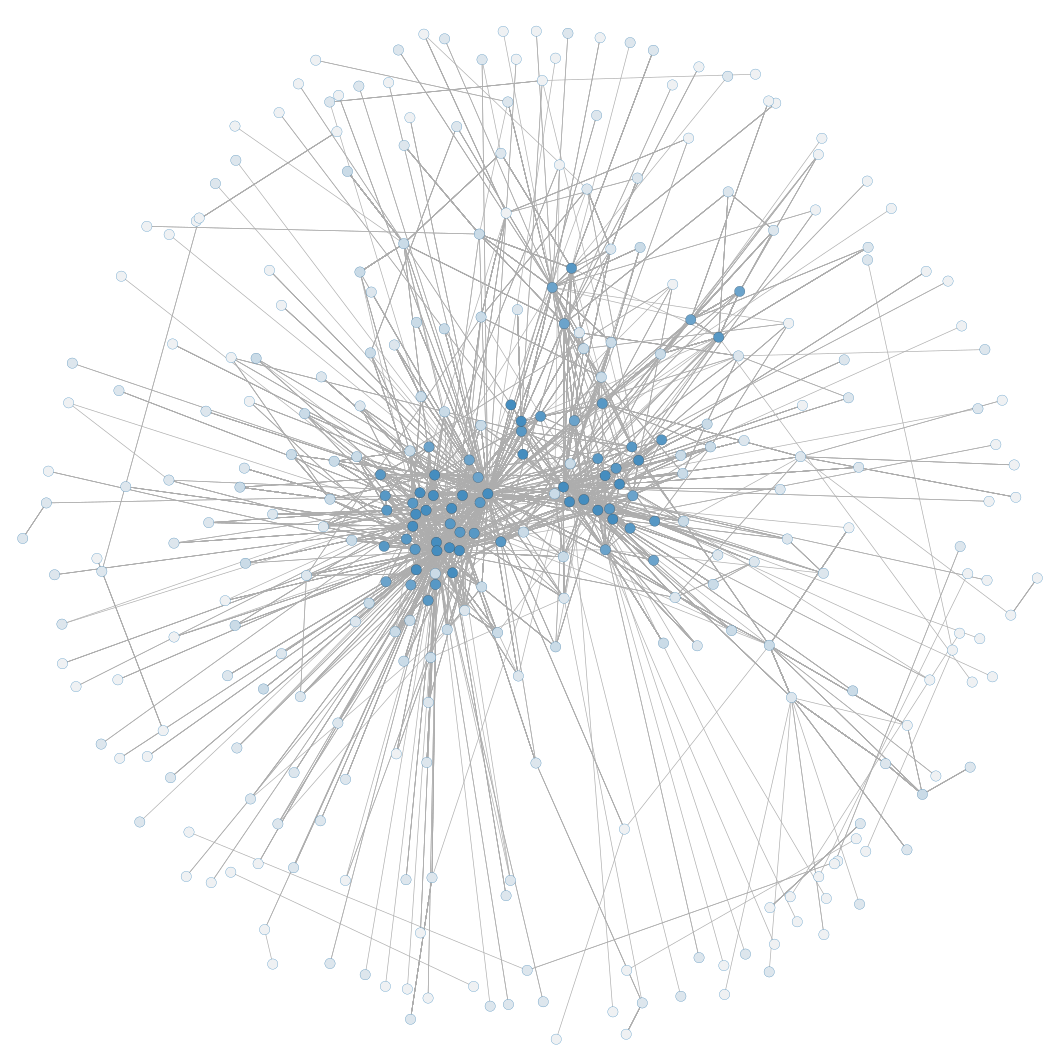
During the pandemic
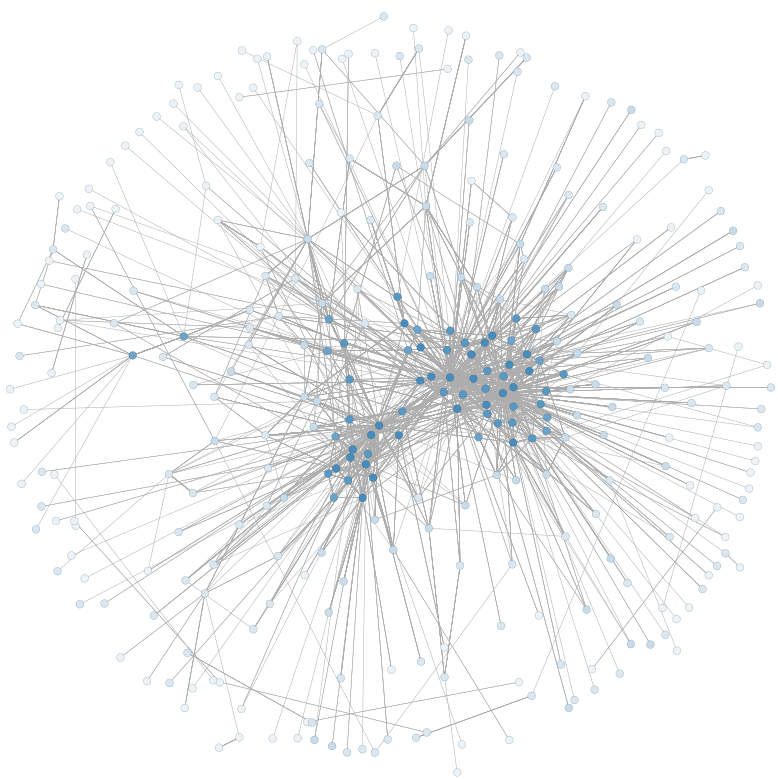
Sub-groups
The next graphs display the sub-groups formed in the network.
Before the pandemic

During the pandemic
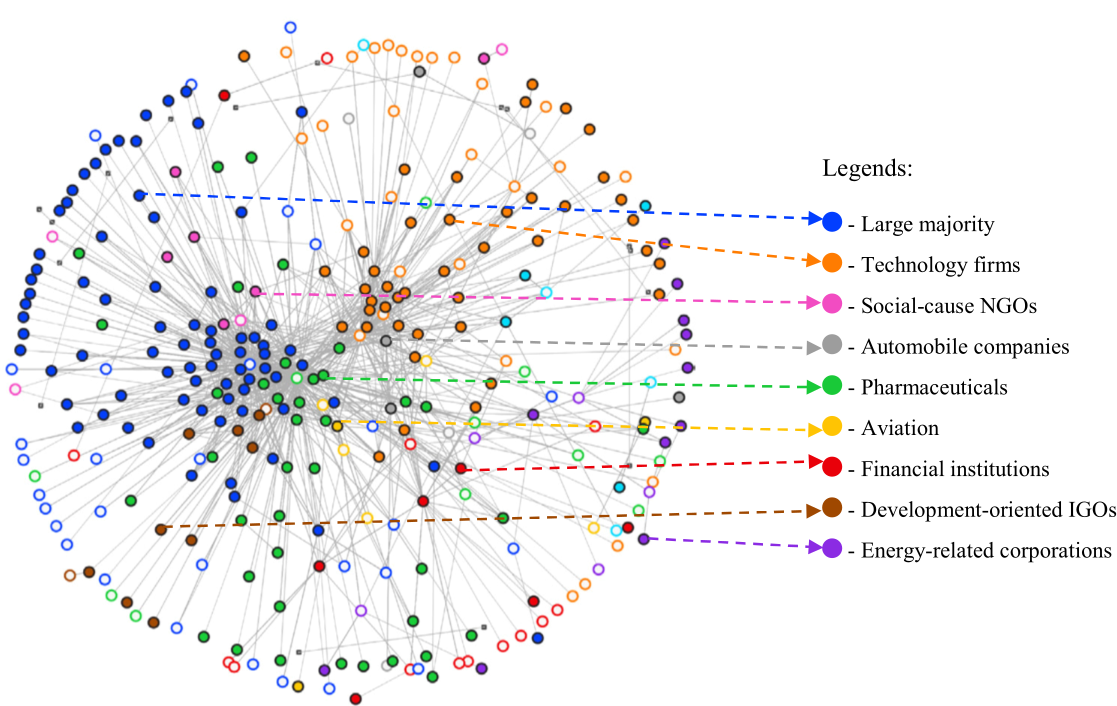
Ultimately, our multi-level analysis of the network allowed us to conclude that the GIN is simultaneously characterized by fragmentation, polycentricity, and complexity. Interestingly, we find that this network is highly concentrated on the usual suspects and the actors forming the network behave differently before and during COVID-19.
The dataset
The dataset shows the interaction events between international organizations (e.g., the UN providing aid to the WHO or Amnesty International criticizing the World Economic Forum), as reported by the world media. The dataset can be useful for understanding the relational dynamics between the organizations and the degree of cooperation of each actor. It encompasses events from January 2018 to May 2021.
You have the dataset as follows: the legend, an exemplifying table, and a link to the file.
- Control No.
- Control variable to identify each row.
- Created Day
- The date when the event occurred—formatted as
YYYY-MM-DD. - Object Name
- The name of the receiver organization of the event.
- Object Primary Type
- The type of organization of the receiver (i.e., IGO, MNC, & NGO).
- Subject Name
- The name of the organization that performs the event.
- Subject Primary Type
- As Object Primary Type, but for the organization that performs the event.
- Goldstein Scale
- The Goldstein Scale score of the event, as coded and presented by GDELT.
| Control No. | Created Day | Object Name | Object Primary Type | Subject Name | Subject Primary Type | Goldstein Scale |
|---|---|---|---|---|---|---|
| 1 | UNICEF | IGO | UNITED NATIONS | IGO | 0 | |
| 2 | UNICEF | IGO | UNITED NATIONS | IGO | 7.4 | |
| 3 | MICROSOFT | MNC | SAMSUNG | MNC | -10 | |
| 4 | SAMSUNG | MNC | MICROSOFT | MNC | -10 | |
| 5 | MICROSOFT | MNC | MNC | 3 | ||
| 6 | UNITED NATIONS | IGO | WORLD BANK | IGO | 3.4 | |
| 7 | UNITED NATIONS | IGO | AFRICAN UNION | IGO | 4 | |
| 8 | WORLD ECONOMIC FORUM | NGO | UNITED NATIONS | IGO | 2.8 | |
| 9 | UNITED NATIONS | IGO | WORLD ECONOMIC FORUM | NGO | 1.9 | |
| 10 | EMBRAER | MNC | BOEING | MNC | -0.4 | |
| 11 | WORLD HEALTH ORGANIZATION | IGO | UNITED NATIONS | IGO | 8 | |
| 12 | UNITED NATIONS | IGO | WORLD HEALTH ORGANIZATION | IGO | 8 | |
| 13 | MICROSOFT | MNC | MNC | 4 | ||
| 14 | CITIGROUP | MNC | CREDIT SUISSE | MNC | 0 | |
| 15 | OPEC | IGO | GOLDMAN SACHS | MNC | 0.4 | |
| 16 | MNC | LENOVO | MNC | 7 | ||
| 17 | MOTOROLA | MNC | SAMSUNG | MNC | -2 | |
| 18 | NOKIA | MNC | SAMSUNG | MNC | 3 | |
| 19 | UNITED NATIONS | IGO | UNESCO | IGO | 3 | |
| 20 | SAMSUNG | MNC | SONY | MNC | 2.8 |
Ensuring data reliability
To ensure reliability of the data, we accounted for the confidence level that GDELT sets for each of the recorded interactions. The confidence level pertains to GDELT’s reliability measure of the likelihood that the data point actually captures the actual interaction between two actors. We iteratively explored the levels of confidence by taking a 20% random sample at each level that we stratified at 5% intervals (i.e., 100%, 95%, 90%, and so forth). We ultimately set the minimum confidence level at 75%, as we found it is the threshold at which the recorded events actually capture the interaction between the concerned international actors and the type of interaction in which they are engaged (i.e., cooperative/conflictive).
Feel free to use and share the data as you see fit. Please, cite and include a link to this page and GDELT.
Download the dataset.
For more details about this research get the open-access Federo, R., & Bustamante, X. 2022 The ties that bind global Using media-reported events to disentangle the global interorganizational network in a global pandemic Social Networks, 70, 253-266.